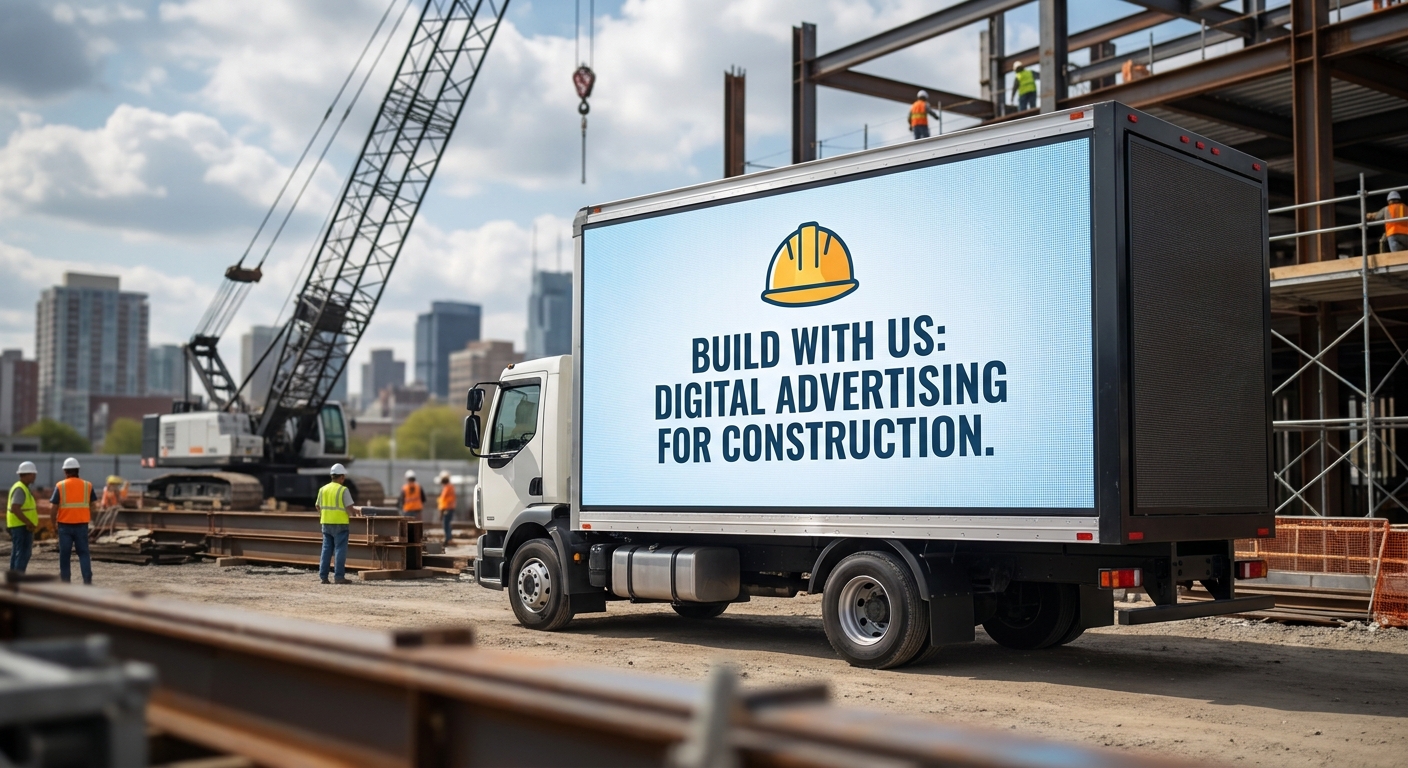
Job site signage gets ignored. A construction company spending on print ads or a folding sign at the fence line is fighting for attention against a hundred other visual distractions on any given street — a digital billboard truck for construction companies solves that by putting a moving, lit-up message in front of drivers who can't tune it out.
- A digital billboard truck for construction companies works best for hiring blitzes, development launches, and trade show pushes, not passive brand awareness.
- Route flexibility near active job sites beats a fixed static board every time in 2026 — Boost Outdoor Media routes trucks block by block.
- The new development launch campaign is the strongest pick for pre-leasing or pre-sale traffic: Buy.
- Skip static billboards near construction zones; drivers glance once and forget the message within blocks.
- A 30-second creative loop with 3-4 rotating messages outperforms a single static graphic for recruitment and safety campaigns.
Why this matters
Construction firms in 2026 are fighting two battles at once: finding skilled labor and getting eyes on new developments before a competitor's crane goes up first. Static signage at a job site fence reaches whoever happens to walk by that block. A mobile billboard truck reaches whoever's driving the commuter corridors, the highway exits near your project, and the neighborhoods where your target hires actually live.
The construction industry doesn't need brand awareness in the abstract. It needs specific, time-boxed attention: fill 40 open positions before spring, get 200 people to a groundbreaking, or put a permit hearing in front of the people who'll show up and object or support it. That's a different job than a static board can do, and it's exactly what a digital billboard truck for construction companies is built for.
Who this is for
This guide is for construction company owners, developers, and marketing leads who need a campaign that moves — literally — with a project timeline. If you're launching a residential development, running a hiring push against a labor shortage, working a trade show circuit, or managing community sentiment around a permit or zoning decision, keep reading. If you just want passive brand recognition with no deadline attached, a static board is cheaper and this isn't your guide.
What to look for in a digital billboard truck for construction companies
Route flexibility near active job sites
A fixed board can't follow your project. A truck can be routed past the site fence during shift-change hours, then rerouted to a job fair three towns over the next week. For construction marketing, the ability to change the route weekly matters more than the size of the screen.
GPS tracking and proof of play
You need to know the truck actually drove the route you paid for. GPS logs and mileage reports turn a vague promise into a receipt — ask for this before signing, not after the campaign runs.
Daypart targeting
Construction hiring campaigns work best timed to shift changes, commuter rush hours, and lunch breaks near industrial parks. A truck that can be scheduled for specific dayparts beats one that just runs 9-to-5 regardless of who's actually on the road.
Creative loop flexibility
A single static graphic gets stale fast. A 30-second loop lets you rotate a hiring message, a safety message, and a project timeline update without buying three separate boards. That flexibility is worth more to a construction marketer than raw screen size.
Multi-market coverage
If your company bids projects across New England, a vendor that can move a truck from a Boston job site to a Providence trade show without a new contract saves real time. Confirm coverage area before you assume it's local-only.
Turnaround speed
Permit hearings and groundbreakings get scheduled on short notice. A vendor who needs six weeks lead time is useless for a hearing announced three weeks out — ask about minimum booking windows up front.
Top picks for construction company campaigns
The flagship pick: new development launch campaign
The hook: get pre-leasing or pre-sale traffic moving before the building's even topped out. One truck running a 12-hour route day past commuter corridors and nearby retail centers puts your development in front of thousands of drivers who'll never see your fence-line sign. Verdict: Buy — this is the single highest-leverage use of a mobile billboard for a construction company with units or space to fill.
The workhorse: hiring and recruitment blitz
The hook: labor shortages don't fix themselves with a job board post. Route a truck past trade schools, union halls, and industrial parks during shift-change hours with a 30-second loop rotating pay rate, benefits, and a scannable QR code. Verdict: Buy for any firm with more than 10 open field positions.
The wildcard: trade show and expo circuit
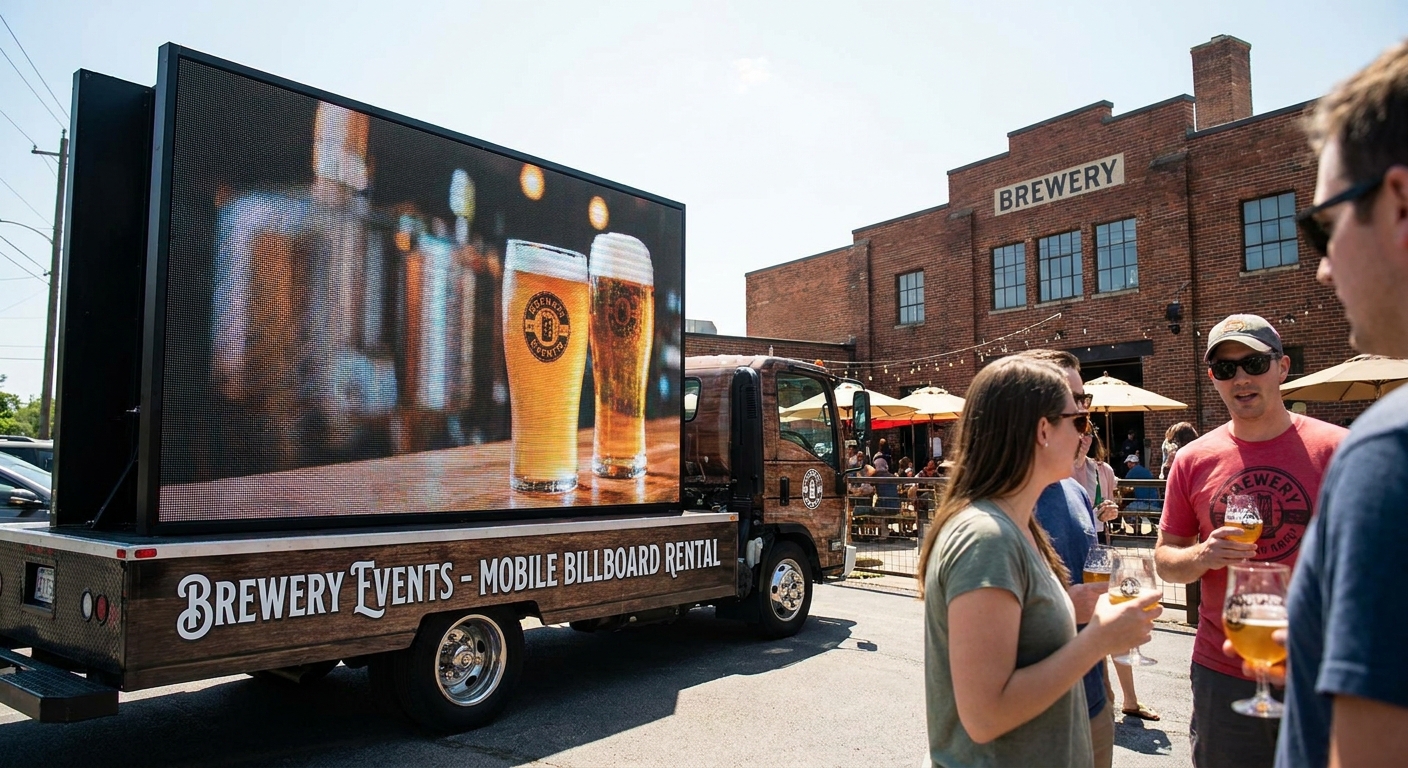
The hook: park a truck outside the convention center on show days and you reach every attendee who walks past, not just the ones who booked a booth. This works especially well when your booth budget is smaller than a competitor's — the truck levels the visibility gap outside the hall. Verdict: Consider if you're exhibiting at three or more regional shows in 2026.
The safe pick: permit and zoning awareness
The hook: community pushback kills projects at the hearing stage more often than at the construction stage. A truck circling the affected neighborhood two weeks before a zoning vote, with a clear message about jobs and tax revenue, shapes sentiment before the room fills up. Verdict: Consider for any project facing a contested hearing.
The one to skip: static site-fence signage alone
The hook: it looks like advertising, but it only reaches whoever happens to be on that specific block. No route flexibility, no daypart targeting, no way to rotate the message when your hiring need shifts from carpenters to electricians. Verdict: Skip as a standalone strategy — pair it with a mobile campaign or drop it.
Get a mobile billboard route quote
Tell Boost Outdoor Media your job site or hearing date and get a route built around it.
What to avoid
- Generic routes with no proof of play. If a vendor can't hand you a GPS log after the campaign, you have no way to confirm the truck ran the hours you paid for.
- Night-only scheduling for hiring campaigns. Shift workers and job seekers are on the road at 6-8am and 4-6pm, not at midnight — a truck running the wrong dayparts wastes the budget.
- A single static graphic for a multi-message campaign. If you're trying to communicate hiring, safety, and a project timeline in one push, a 30-second rotating loop does the job a static board can't.
Verdict comparison
| Campaign type | Best for | Route flexibility | Verdict |
|---|---|---|---|
| New development launch | Pre-leasing/pre-sale | High — commuter corridors | Buy |
| Hiring blitz | Labor shortage | High — shift-change routing | Buy |
| Trade show circuit | Expo visibility | Medium — venue-fixed | Consider |
| Permit/zoning awareness | Community sentiment | Medium — neighborhood-specific | Consider |
| Static site-fence sign | Passive local awareness | None | Skip |
FAQ
What's the best digital billboard truck for construction companies in 2026?
The best use case is a route built specifically for your active project — hiring blitzes and new development launches see the strongest results because the message matches a real deadline. A generic static board tied to one fixed location performs worse for construction marketing than a routed truck.
Is a mobile billboard truck better than a static billboard for construction hiring?
Yes, for hiring campaigns a mobile truck outperforms static because it can be routed past trade schools, union halls, and industrial parks during shift-change hours. A static board only reaches whoever passes that one fixed location.
How much does a digital billboard truck rental cost for a construction project?
Cost depends on route length, number of days, and daypart scheduling, so get a quote based on your specific job site or hearing date. Boost Outdoor Media builds quotes around the actual route needed rather than a flat rate card.
Can a mobile billboard truck help with a zoning or permit hearing?
Yes, routing a truck through the affected neighborhood in the two weeks before a hearing shapes public sentiment before the room fills. This works best paired with a clear, simple message about jobs or tax revenue tied to the project.
How long should a construction hiring campaign run?
Most hiring blitzes run in short bursts tied to shift-change hours rather than a long flat schedule, since the goal is filling specific open positions fast. A two-to-three week push timed around commuter rush hours typically outperforms a slow, months-long rollout.
Do digital billboard trucks work for trade show marketing in construction?
Yes, parking or routing a truck near a convention center during show days reaches every attendee walking past, not just people who stop at your booth. This matters most when your booth budget is smaller than competitors exhibiting at the same show.
What creative works best on a construction company's mobile billboard?
A 30-second loop rotating two or three messages — hiring, safety, or project timeline — performs better than one static graphic because it lets you communicate more without buying separate campaigns. Include a scannable QR code for hiring pushes so drivers can act immediately.
How far in advance do I need to book a mobile billboard truck?
Booking windows vary by vendor, so ask about minimum lead time up front, especially if you're responding to a permit hearing announced on short notice. Confirm turnaround speed before you assume a vendor can accommodate a fast timeline.
One last thing
The construction firms getting the most out of mobile billboard trucks in 2026 aren't running one long campaign — they're running short, targeted bursts timed to specific moments: the week before a groundbreaking, the two weeks before a permit vote, the month a hiring push needs to fill 40 seats. A truck that sits on one route for three straight months is doing the job of a static board at a higher price. Match the campaign length to the deadline, not the other way around.